What is the logic behind the recent price increases of LED displays?
2026-06-08
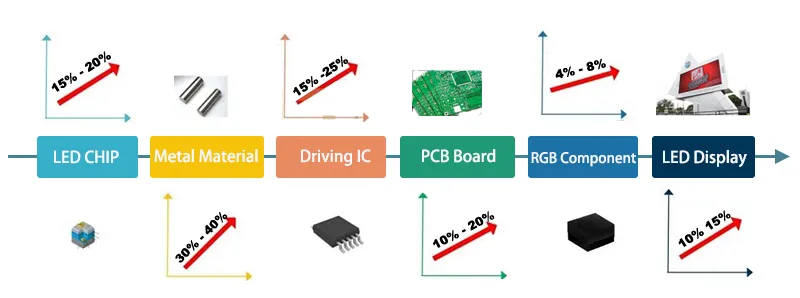
Based on industry data, the current round of LED display price increases is driven by the following five interlocking core logics, creating a rapidly transmitting systemic effect.
1. Sharp rise in precious metal raw material prices
This is the most fundamental driver. The prices of **gold, silver, copper** and other precious metals, which are core raw materials for LED displays, have been soaring since 2025. Silver prices have risen by **up to 170%**, while gold has increased by **over 70%**. Since these materials account for a very high proportion of the cost of core components such as lamp beads and PCBs (e.g., over 70% of packaging costs), this has directly led to a sharp rise in production costs for display manufacturers. For example, industry leader **Leyard** announced a price increase of **3% to 15%** in February 2026, explicitly attributing it to the substantial rise in raw material costs.
2. Soaring costs of PCB and other basic materials
Following closely is the pressure transmitted from upstream raw materials and geopolitical conflicts. PCB (printed circuit board), as a key substrate material, is not only affected by high copper prices but also by rising international crude oil prices due to geopolitical tensions, leading to a supply shortage and sharp price increases for chemical raw materials like epoxy resin. This caused PCB prices to surge **40% in a single month in April 2026**. The cost surge quickly transmitted through the PCB industry, further driving up the production cost of entire LED displays.
3. AI chips crowding out wafer capacity
On the semiconductor manufacturing side, the explosion of AI is systematically crowding out capacity for traditional LED chips. Wafer foundries prefer to produce more profitable AI-related chips, resulting in the capacity share reserved for LED chips dropping sharply from **30% in 2024 to 15% in 2025**. This severe capacity squeeze directly leads to tight supply and rising prices for LED driver chips. In response to rising wafer costs, multiple leading manufacturers such as **Chipsstar** and **Lipu** have announced price increases of **over 30%** for their entire range of driver products in May 2026.
4. Rebound from long-term low-price competition
This is also an often overlooked market correction logic. Prior to this, the LED industry experienced years of vicious price wars, with average prices of mainstream products dropping by 30% to 40%, severely eroding industry profits. Another purpose of this round of industry-wide price increases is to leverage upstream cost pressures to return pricing power to leading large manufacturers, restore industry profitability, and end the era of "low-price involution."
5. Demand recovery coupled with multiple rounds of rapid transmission
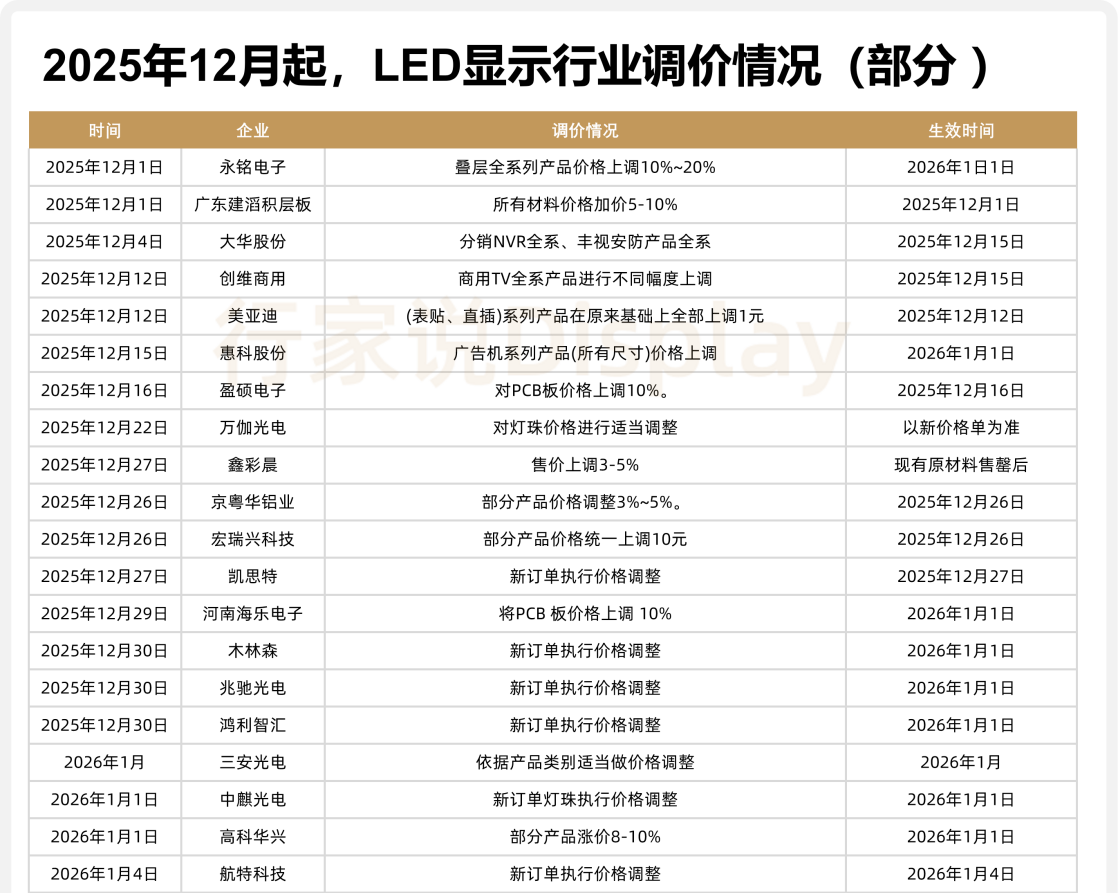
On one hand, demand in niche markets such as large-scale sports events (e.g., World Cup) and LED all-in-one machines has recovered in 2026. Purchase orders being released have increased spot demand and intensified supply tightness. On the other hand, this price increase is not a short-term isolated event but a dense, chain-reaction systemic transmission — **8 rounds of price increases within 84 days**. Pressure originated from driver ICs, lamp beads, etc., and quickly spread to the entire industry chain including packaging and end applications, showing characteristics of "wide coverage, high frequency, and increasing magnitude."
Summary
In summary, this is not a typical demand-driven inflation, but a **cost-driven price surge** unexpectedly triggered by upstream raw materials and the AI industry.